The Maypole: Nature, Rhythm and Community in Waldorf Education
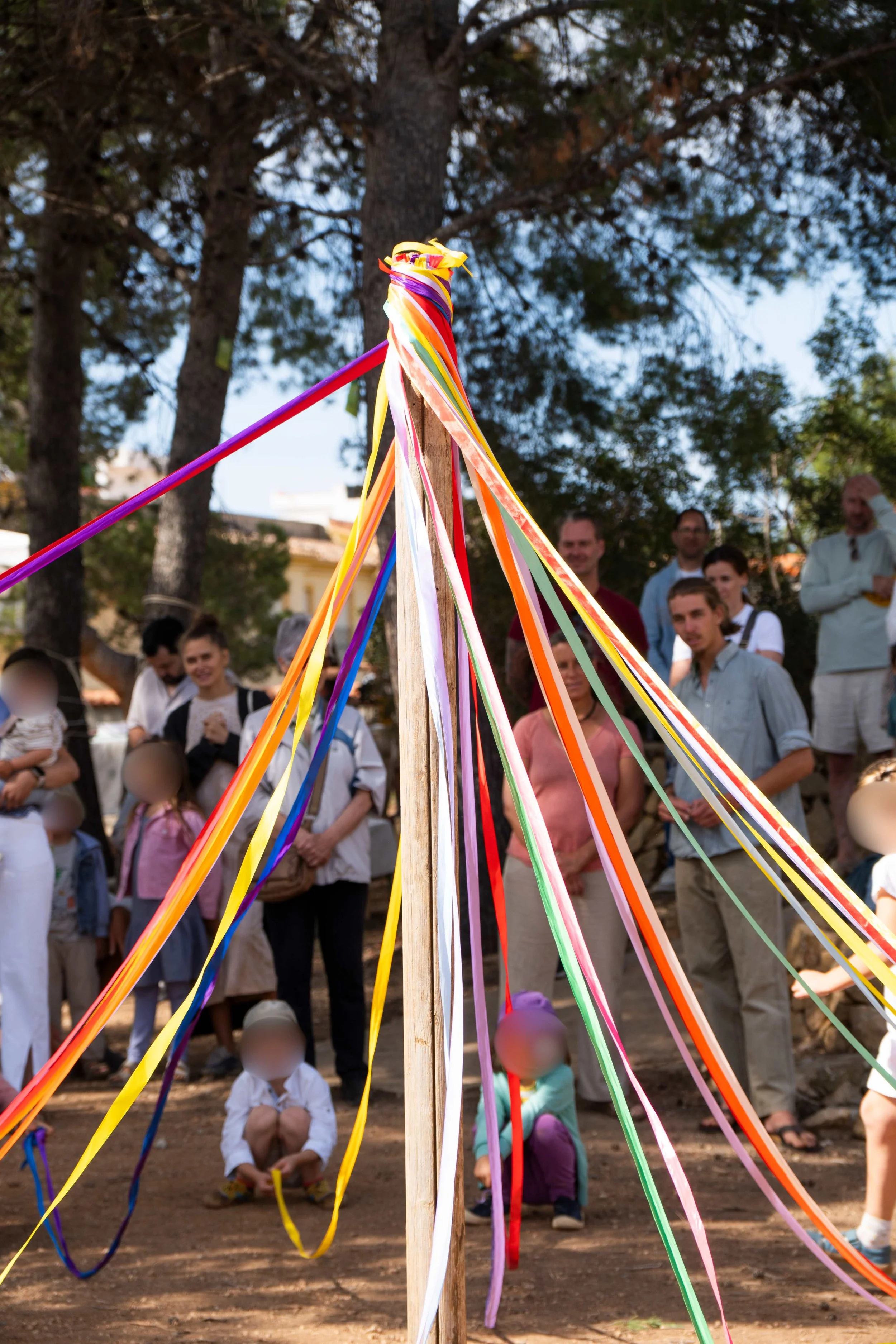
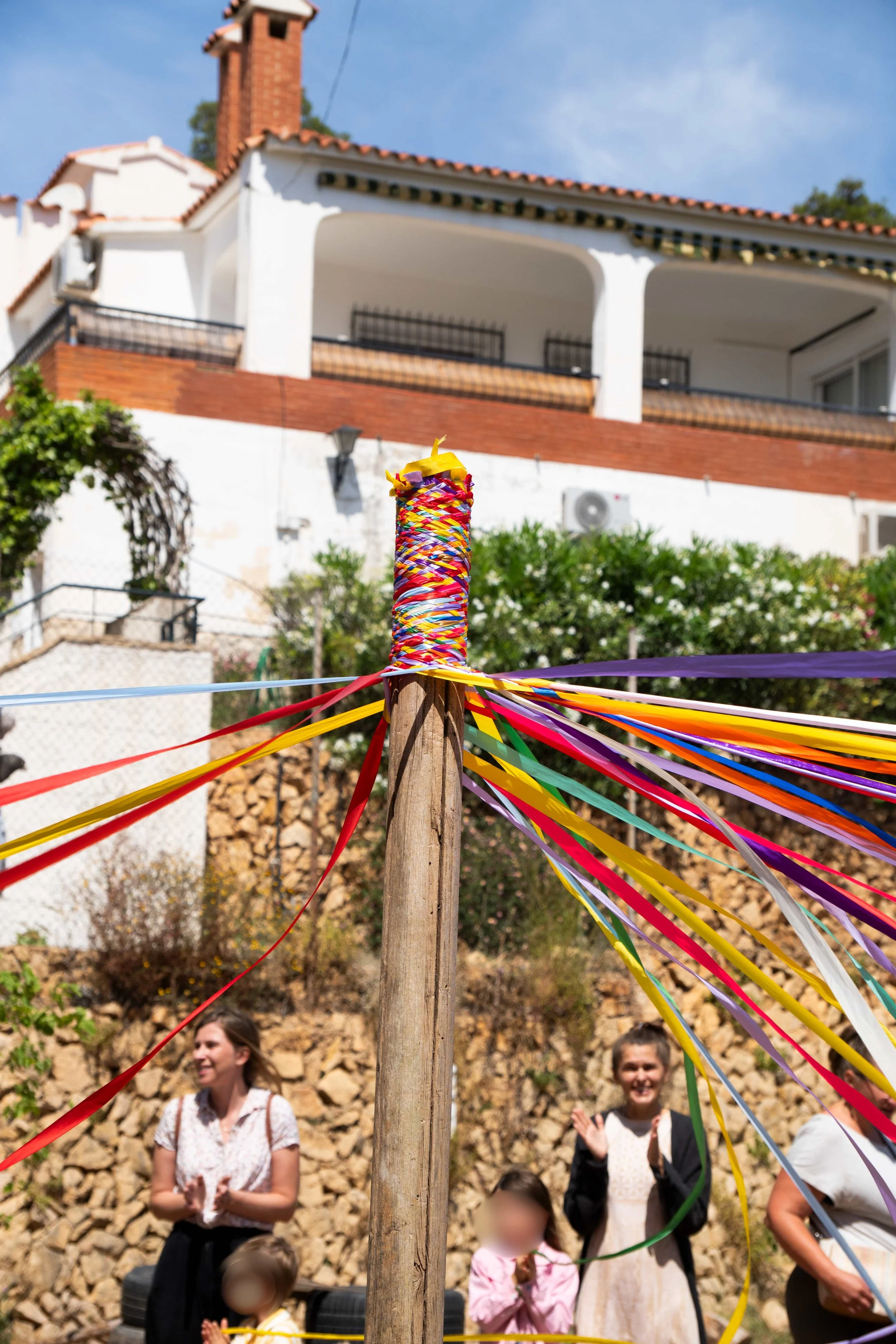
🌿 El Palo de Mayo celebrates the arrival of spring and the fertility of nature.
In Waldorf, seasonal festivals help children feel part of natural rhythms.
Rudolf Steiner saw the connection with nature as essential for inner balance.
Celebrating together strengthens joy, community and belonging.
The movements around the palo develop coordination and rhythmic sense.
The child learns through his body, his game and shared experience.
Circular dances create harmony and group cooperation.
Learning occurs in a lively and natural way.
The flowers, colors and songs awaken sensitivity and beauty in childhood.
Steiner argued that the environment should emotionally nourish even the child.
Aesthetic experiences strengthen imagination and inner well-being.
Beauty also educates.
Waldorf celebrations are not spectacles, they are participatory experiences.
The child learns by living each moment with presence and meaning.
Preparing decorations and actively participating strengthens autonomy and social bonds.
Practical experience has great pedagogical value.
✨ El Palo de Mayo connects childhood, nature and community.
The fiestas strengthen affective memories and a sense of belonging to the world.
El niño lives the year as a cycle full of meaning.
This is how we cultivate a more conscious and human childhood.